Technical SEO Audit
30 minute discovery call • 100% free • Zero obligation
What’s Included
Every deliverable is crafted specifically for your website architecture, market niche, and organic pipeline goals. No generic checklist fluff.
Crawlability and indexability
Site architecture and URL structure
Canonicals and duplicate pages
XML sitemap and robots.txt
Internal linking
Metadata and heading structure
Mobile usability and page experience
Page speed and Core Web Vitals
Redirects, broken links and status codes
Structured data and schema
Image and media SEO
JavaScript-related SEO issues
Technical issues affecting search visibility
What do you get?
First, be rest assured you won’t be receiving a spreadsheet of problems with no explanation, instead, you’d get a prioritized audit showing what is wrong, why it matters, how urgent it is, and what should happen next.
Issues are separated into practical priorities so your team can work through the changes without treating every technical finding as an emergency.
When should you opt for a technical SEO audit?
A technical SEO audit is particularly useful when:
-
Your website has recently launched or been redesigned.
-
Organic traffic has dropped without an obvious reason.
-
Important pages aren't appearing in Google.
-
Your site has accumulated years of SEO changes.
-
You're moving to a new CMS or domain.
-
Developers are making major website changes.
-
Your content is strong but search performance isn't following.
-
You want an independent SEO assessment before investing further.
What happens after the audit?
An audit is a diagnostic. The next step depends on what we find.
You can take the recommendations to your existing developer or marketing team, or we can help implement the SEO work through Website SEO Integration.
If the technical issues are only part of the problem, we can also connect the findings to keyword research, content strategy, on-page SEO and broader search strategy.
For Example, With Hillz Exquisites: A Newly Built Automotive Website
When I started this technical SEO audit in April 2026, the site had just been built and had no search history, which is the point where an audit costs the least and prevents the most. Its pages were not indexed, the website was generic, with no tailored services, positioning or local discoverability.
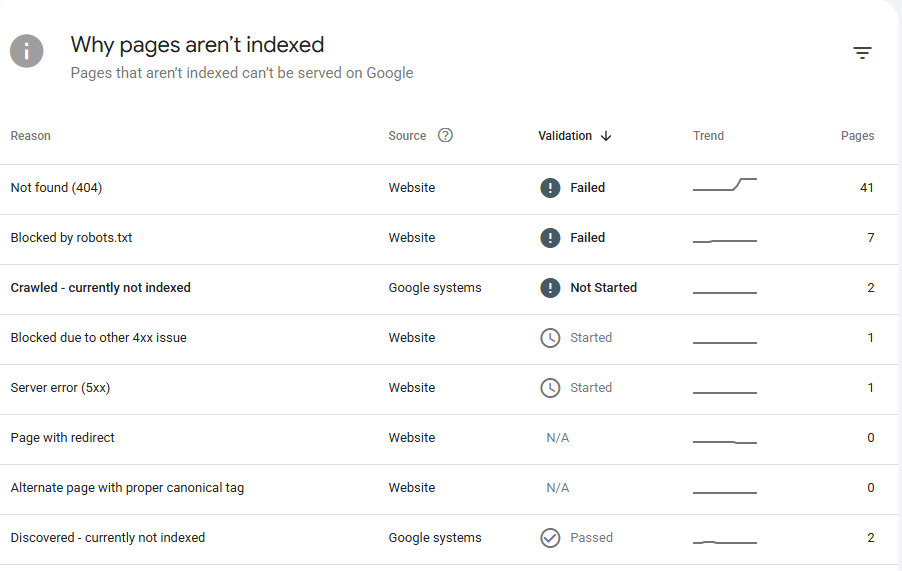
I started by crawling 57 URLs with Ahrefs Site Audit. By the June 20 recrawl the site had grown to 63 URLs. I reviewed the site’s structure, URLs, internal linking, page content and technical health.
The first crawl scored 30/100 and flagged 20 issues. The most serious was that 54 of the 57 URLs crawled could not be crawled or indexed properly, so Google could not show them in search results. The second was the landing page copy.
Landing pages are one of the most ignored parts of SEO, yet they are where Google finds the keywords and local signals that decide whether a site gets shown. The generic landing pages created and designed for the beautification of the website did not help local discovery, nor did they include the necessary keywords and commercial or informational copy needed to surface the website and promote it within local and international searches.
The fix was rewriting the copy, including specific keywords, linking relevant pages to each other, adjusting calls to action, pointing out customer needs, and including those into the pages after thorough audience research and search volume analysis.
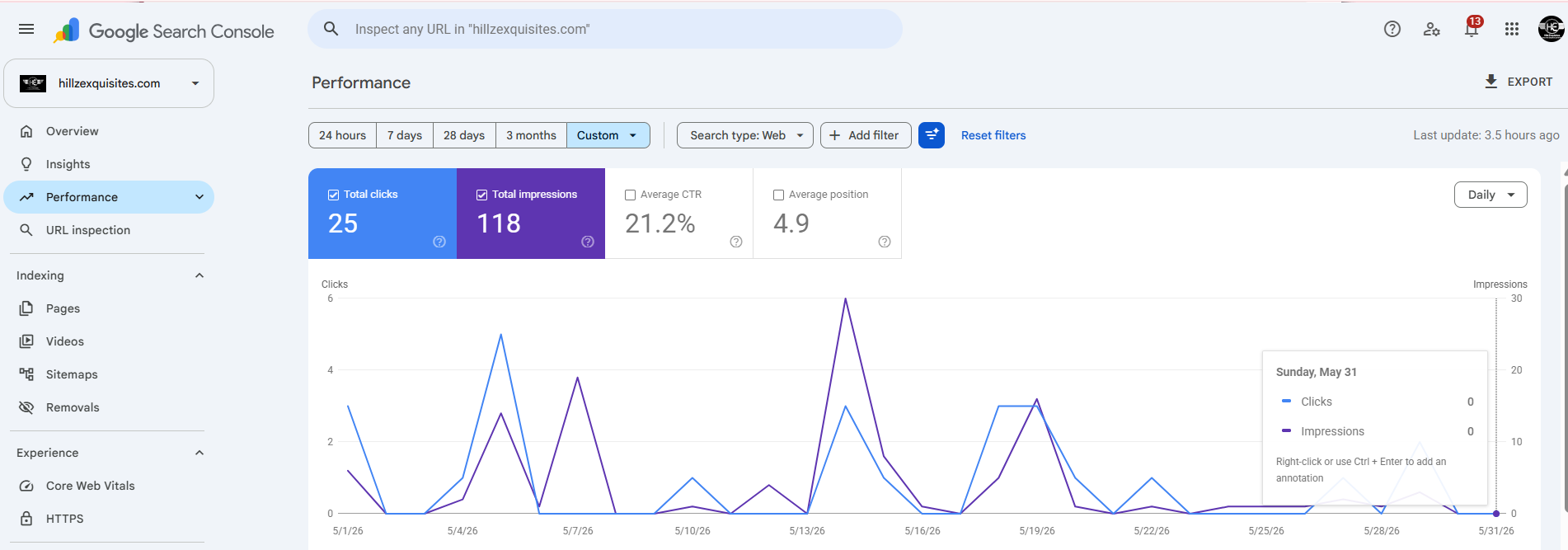
This was the result in about a month after:
What Was Evaluated and Repaired Over Two Months
Swipe horizontally to view all columns →| Questions I Answered | What I Checked | How It Affected the Website | What I Fixed |
|---|---|---|---|
| Can Google reach every page? | Crawlability, robots.txt, XML sitemap and status codes. | Pages Google cannot crawl, cannot rank. 54 URLs were affected. | With the assistance of the site developer, I corrected robots.txt rules that blocked pages, rebuilt the XML sitemap so it listed only live, indexable URLs, and had broken pages either restored or redirected. |
| Will Google keep these pages in its index? | Indexability, canonical tags, duplicate pages and noindex tags. | Pages marked noindex, or competing with a duplicate, stay out of search results or split their ranking. 54 URLs were affected. | I removed noindex tags left over from the build, set one canonical URL for every page, and consolidated duplicate pages. |
| Does the site’s structure make sense to Google? | Site architecture, URL structure, internal linking and redirects. | Orphaned pages and redirect chains make it harder for Google to find and value important pages. Checked and evaluated for each URL. | I shortened URLs and made them keyword led, collapsed redirect chains into single redirects, and added internal links to orphaned pages from relevant pages. |
| Can Google tell what each page is about? | Metadata, heading structure, structured data and image SEO. | Missing or duplicate titles, missing H1s and schema errors leave pages unclear to Google. The rewrite covered all 54 affected pages. | I wrote unique titles and meta descriptions, gave each page one H1 with a logical heading order, added alt text to images, and fixed schema errors. |
| Is the site fast and usable on a phone? | Core Web Vitals, page speed and mobile usability. | Slow pages and layout problems hurt visitors and can hold rankings back. The website scored 80 on mobile and 90 on desktop in PageSpeed Insights. | I compressed oversized images, deferred render blocking scripts, and fixed layout shifts and mobile display problems. After the fixes, it scored 90 on mobile and 100 on desktop. |
| Does the site display properly to search engines? | JavaScript related SEO issues. | Content that loads only through scripts can be missed by crawlers. I had the developer look into this as an audit recrawl flagged it. | I made sure key content and links were present in the page’s HTML so crawlers could read them without running scripts. |
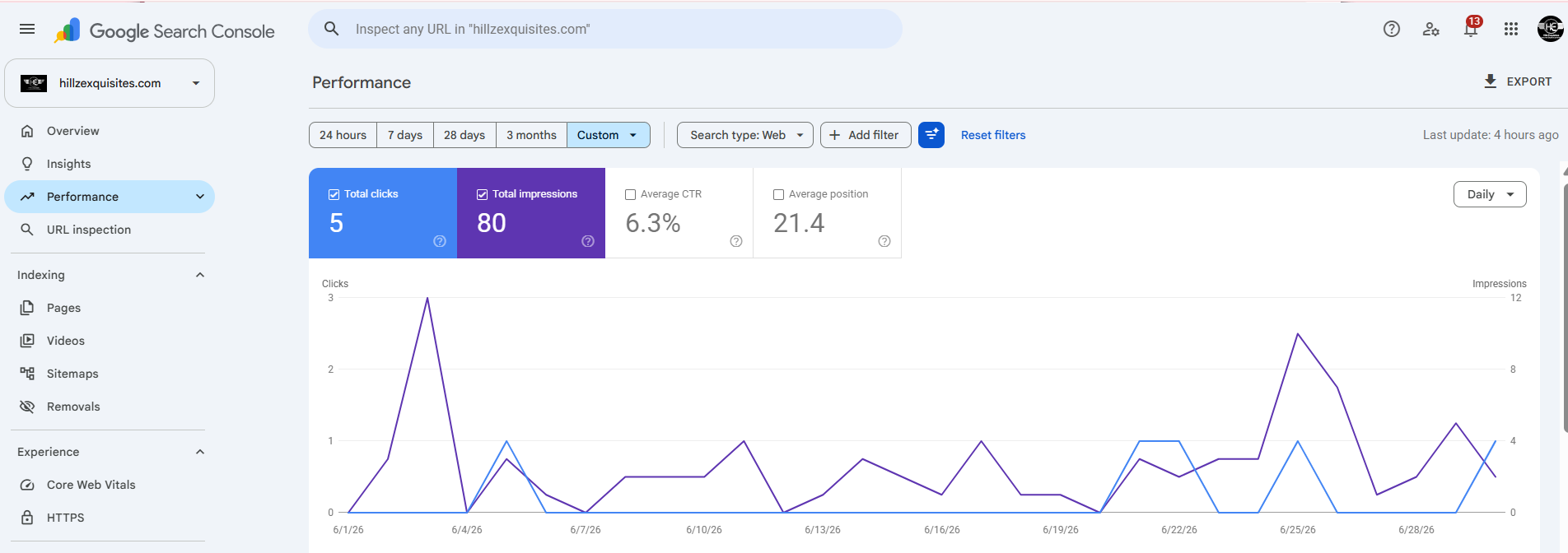
After the developer applied the fixes, the June 20 snapshot showed a Health Score of 100/100. By the end of June 2026, the results looked like this:
Between 1 April and 3 November 2026, the website recorded about 1.2k impressions, 90 clicks and an average Google position of 11.6:
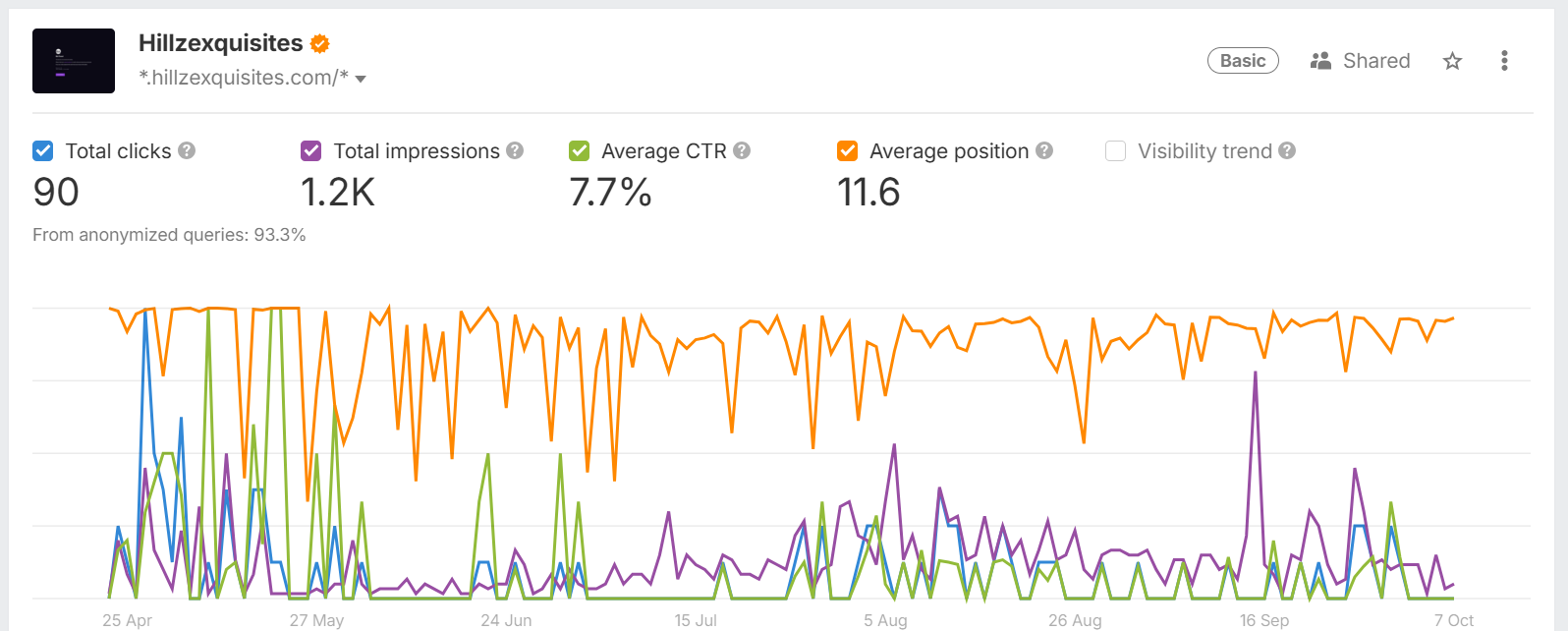
While the client onboarded me for a two to three month sprint, the result of such investment has lasted months, and solidified the foundation of the website for local SEO, and search results/discovery.
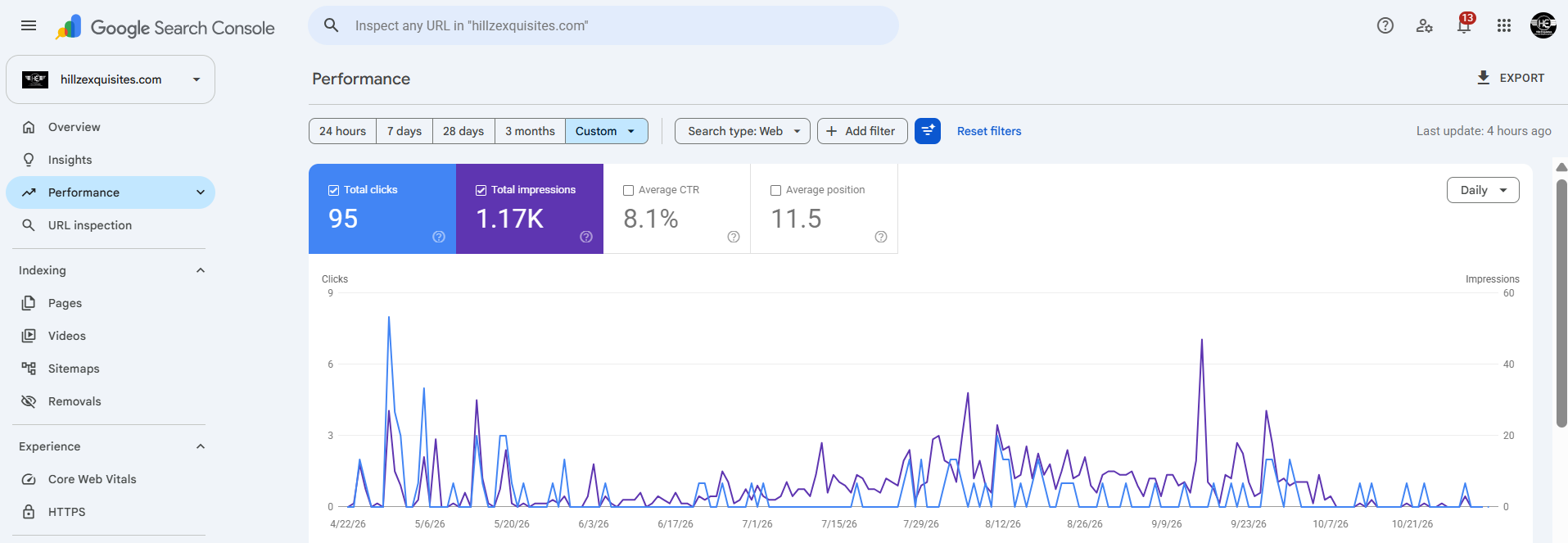
This growth shows how much a technical audit matters to the foundation of a website.
By eliminating crawl barriers, fixing canonical integrity, and aligning content architecture with actual search intent, the domain transitioned from zero search visibility to durable organic capture.
Every technical audit follows my hands on consulting workflow from initial discovery diagnostic to full walkthrough. Book a direct discovery call with Jane to review your site architecture →
Our Search Engine & Entity Architecture Standards
Every sprint is executed against strict search documentation guidelines and web authority standards to ensure sustainable organic equity and AI discovery.
1. Technical Indexation & Crawl Budget Efficiency
We resolve crawl loops, canonical anomalies, render blocking scripts, and index bloat. All recommendations are benchmarked directly against Google Search Central Crawling & Indexing Documentation to maximize crawler efficiency across enterprise architectures.
2. Semantic Entity Modeling & Schema Validation
Search systems prioritize verified entities over ungrounded strings. We build clean JSON-LD structured data aligned with official Schema.org Specifications to establish clear knowledge graph entities for your brand, leadership, products, and services.
3. Helpful Content & User Intent Alignment
We target high intent commercial queries where prospective buyers seek solutions, avoiding low value keyword stuffing. Every content architecture is structured in accordance with Google Helpful Content Guidance to provide genuine informational and transactional utility.
4. Performance & Web Accessibility Compliance
Search performance is directly tied to user experience. We audit and optimize page speed, interaction readiness, and mobile ergonomics following recognized W3C Web Standards and Core Web Vitals thresholds to ensure seamless browsing on any device.
Frequently Asked Questions
Clear answers regarding deliverables, turnaround time, and how I work.
A technical SEO audit examines crawlability, indexation status, site architecture, internal link equity, structured data markup, canonical tags, redirects, and Core Web Vitals performance.
Most audits are delivered within 5 to 7 business days, depending on website size and the number of indexed templates.
Yes, you can pair the audit with our Website SEO Integration sprint, where I implement the fixes directly in your CMS or coordinate with your engineering team.
Access to Google Search Console and Google Analytics is ideal. If access cannot be shared immediately, the audit begins with external crawling and architectural inspection.
Need to know what's holding your site back?
Start with a technical SEO audit and get a clearer picture of what search engines are actually seeing.
Related SEO Solutions
Website SEO Integration
You already know what needs fixing. This is the sprint that gets it live. I implement titles, headings, internal links, …
Keyword Research & Mapping
Most keyword research gives you a list. This gives you a structure. I map each query to the one page …
SEO Strategy
A strategy you can act on Monday. I connect your business model to search demand, rank the opportunities by revenue …
Google Business Profile
If you serve clients locally, your profile is often the first thing they see. I set it up or clean …
SEO Content Writing
Content written against a brief, not a keyword list. I set the intent, the angle and the internal links, then …
Link Building
Relevant links, earned through outreach, not bought from a list. I identify pages worth linking to, run the outreach with …